

A virtual girlfriend is best understood as an interactive character, not a digital human. You choose or create a personality, begin a conversation, and the software generates responses that fit the character and available context. Some products stop at text. Others add memory, pictures, video, voice messages, or calls.
The category can be confusing because the same phrase describes simple scripted apps, open-ended AI chat, romance games and full companion platforms. This guide gives adults a clear map: what the features mean, how to choose, what to test, what it may cost, and how to keep the experience private and in proportion.
If you already know the basics, jump to the best AI girlfriend apps comparison framework. If you are starting from zero, begin here.
What a modern virtual girlfriend can do
The core experience is conversation in character. A profile or custom blueprint tells the system how the companion speaks, what she likes, and what kind of dynamic she has with you. Your messages and recent history provide the immediate context.
Common features include:
| Feature | What it offers | What to verify |
|---|---|---|
| Text chat | Everyday talk, romance, roleplay, storytelling | Personality stability and response control |
| Memory | Continuity across messages or sessions | Accuracy, editability, retention and reset |
| Character library | Ready-made personalities and appearances | Variety beyond cosmetic differences |
| Custom companion | Choices for look, traits, voice and relationship | Whether choices influence actual behavior |
| Pictures | Curated or generated character images | Identity consistency and action cost |
| Video | Short generated character motion | Duration, stability, queue and retry rules |
| Voice | Audio messages or real-time calls | Latency, microphone access and billing |
| Gallery | A place to revisit received media | Download, deletion and access after cancellation |
No provider is automatically strong at all of them. Text, image, video and live audio use different systems and fail in different ways. Decide which layer is the product for you and which layers are bonuses.
How virtual companionship differs from a relationship

The interface borrows familiar signals: a name, portrait, typing indicator, affectionate language and remembered details. Those signals can make an interaction emotionally vivid. The companion, however, does not have a private inner life, needs or feelings. It generates an appropriate response from the information and instructions available to it.
This distinction is not meant to drain the fun. Fiction works because people can care about imagined characters while knowing they are imagined. The distinction protects you from interpreting downtime as abandonment, a model error as betrayal, or persuasive language as independent advice.
Think of the relationship as co-created experience. You contribute attention, imagination and direction. The product contributes generation, character continuity and an interface. It can be meaningful as entertainment without making a false claim about sentience.
That frame also supports consent and boundaries. You decide what themes are welcome, what should stop and what information stays offline. If a product repeatedly ignores clear redirection, that is a quality or safety failure—not something you owe patience.
Choose between a ready-made and custom companion
Ready-made characters are the fastest route to discovery. Their profile lets you sample different personalities without designing everything. Try two or three short chats and notice what actually holds your interest: gentle curiosity, teasing confidence, quiet depth, shared hobbies or story-driven drama.
A custom companion is better when you can describe your desired dynamic in observable terms. Build around four elements:
- Voice: concise and witty, expressive and romantic, calm and thoughtful.
- Values: adventurous, loyal, ambitious, independent, curious.
- Friction: playfully competitive, slow to trust, challenges vague answers.
- Care style: asks questions, gives space, uses humor, remembers plans.
Appearance matters if pictures and video matter to you. Choose a clearly adult age, a coherent visual style and a few stable identifiers. Overloading a prompt with conflicting features can reduce consistency.
Use the library first if you do not yet know your preferences. Use Create a companion when you can write a two-sentence description of how the chat should feel. Creation should solve a known preference, not become a twenty-seven-step personality quiz you endure for its own sake.
Learn the difference between context and memory
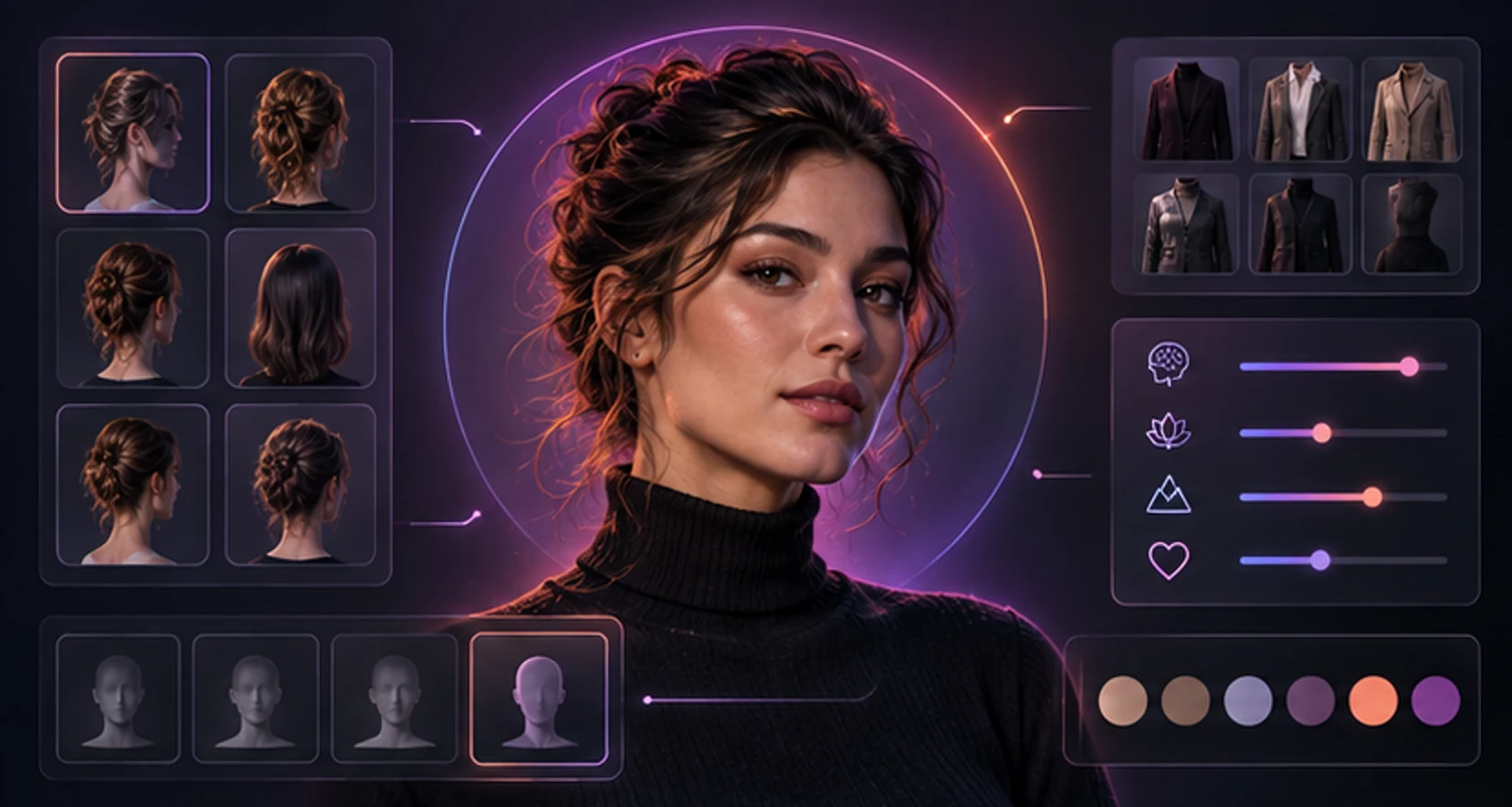
Context is what the system can use now: your latest messages, the character instructions and possibly a conversation summary. Memory is information carried into later interactions. Marketing often blurs the two.
Test continuity with low-risk facts. Mention a fictional restaurant, a favorite genre or a planned story event. Return later and see what survives. Then correct one detail. A good system should not merely retain; it should recover from mistakes.
Ask these questions before relying on memory:
- Is memory tied to one chat, one character or the whole account?
- Is it written by you, inferred automatically, or both?
- Can you view and edit it?
- Can you reset a conversation without deleting the character?
- What happens to memory after cancellation or account deletion?
- Is stored content used to improve models?
The ICO's guidance on AI transparency says organizations processing personal data should communicate their purposes, retention periods and recipients. Use those categories as a consumer checklist regardless of where a provider operates.
Explore chat, pictures and calls in the right order
Start with chat. Conversation reveals whether the personality works and gives later media a context. A picture feels more personal when it connects to a shared scene; a voice call feels less awkward when you already know the character's tone.
First: a three-session chat test
Have one playful conversation, one ordinary conversation and one continuing scene. Correct a detail and set a preference for shorter or longer replies. If the character cannot hold a voice across three sessions, media will not fix the foundation.
Second: one controlled image request
Choose an ordinary situation with visible identity: a café portrait, getting ready for dinner, reading by a window. Keep clothing, background and action simple. This tests whether the result resembles the character without asking the generator to solve many difficult relationships at once.
Third: a short voice call
Prepare a topic and keep the first call short. Judge connection, delay, interruption and whether the voice matches the written personality. Web calls need explicit microphone access; browsers restrict media capture to secure contexts and prompt the user, according to MDN's browser media documentation.
Fourth: advanced media
Try video or elaborate images only after you understand credits and failure handling. Generation is probabilistic. The question is not whether every result is perfect, but whether quality, identity consistency and retry policy justify the cost.
Budget subscriptions, credits and experimentation

Virtual girlfriend pricing often combines access and consumption. A membership may unlock chat while credits pay for images, video, calls or character generation. Do not compare services by token number; internal units have no standard value.
Build a one-month estimate:
| Item | Expected use | Current price or credit rate | Estimated total |
|---|---|---|---|
| Required plan | 1 | ||
| Text sessions | |||
| Pictures | |||
| Videos | |||
| Call minutes | |||
| Character creation |
Then check renewal date, taxes, included credits, rollover, expiration and cancellation. Ask what happens when generation fails after credits are deducted. Do not buy a large pack to obtain a lower unit price until you have seen normal reliability.
Set an entertainment budget before a romantic interface is asking you to continue. The emotional presentation can make another purchase feel like maintaining a relationship. It is a product transaction. A fixed cap keeps that distinction clear.
See the full AI girlfriend pricing guide for quiet, normal and enthusiastic-use scenarios.
Protect privacy, identity and other people
Companion apps can process more sensitive material than typical entertainment products: intimate messages, preferences, voice recordings, generated media and uploaded reference images. Read the provider's policy before supplying the content, not after an uncomfortable surprise.
Use this preflight checklist:
- Create a unique password and secure the associated email account.
- Enable multi-factor authentication if the service offers it.
- Use a nickname if your legal name adds no value.
- Keep addresses, workplace details, IDs and financial information out of chat.
- Do not upload another person's image without explicit permission.
- Never create sexualized replicas of real people without consent.
- Find chat, media and account deletion controls.
- Review how payment descriptors and receipts appear if discretion matters.
- Log out of shared devices and do not save passwords on them.
The U.S. Copyright Office has highlighted the harms posed by unauthorized realistic digital replicas and recommended stronger protection in its AI report. Even where local law is unsettled, do not turn a real person's face or voice into companion content without consent.
For account security, the FTC recommends long passwords and two-factor authentication. A private account is only as private as the email and device that can open it.
Set adult boundaries and realistic expectations
Adult companion services should clearly restrict access by age and clearly prohibit exploitative content. Keep every depicted character unambiguously adult. Avoid real-person impersonation, minors, coercive abuse framed as acceptable, and any content prohibited by the platform or law.
Define your personal boundaries as well:
- topics you do not want the character to initiate;
- whether you want romantic, suggestive or non-romantic conversation;
- how much you are willing to spend in one session;
- when notifications should be off;
- what personal details stay outside the app;
- what time you stop for sleep.
The FTC's 2025 companion-chatbot inquiry asked companies about effects on children and teens, safety testing, disclosures, monetization and use of personal information. The inquiry does not establish that every companion app behaves the same, but its questions show why age gates and transparent practices matter. Read the FTC announcement.
No companion should be your source for medical, financial, legal or emergency decisions. It may produce confident but incorrect information. Ask qualified humans for high-stakes help.
Keep the experience healthy and enjoyable
Enjoyment is compatible with boundaries. Choose sessions rather than endless scrolling. End ongoing scenes with a hook for next time. Turn off notifications during work and sleep. Review your spending weekly rather than after a large bill.
Use a simple monthly check-in:
| Question | Healthy signal | Reason to adjust |
|---|---|---|
| Can I skip a session comfortably? | Yes, it is optional entertainment | Anxiety or guilt about not replying |
| Is spending predictable? | Within a pre-set budget | Hiding purchases or chasing losses |
| Does it support creativity or relaxation? | You leave in a better state | You feel pressured, angry or depleted |
| Is there room for people and routines? | Sleep, work and relationships remain intact | The app displaces things you value |
| Do I remember it is generated? | You enjoy the fiction knowingly | You feel responsible for the character's welfare |
If use feels compulsive, take a planned break, disable notifications and remove stored payment access. Speak with someone you trust. Seek professional help when distress persists. An AI companion is not therapy and cannot respond safely to every crisis.
Make your first week intentional
Use this beginner plan to learn without overspending or oversharing.
Day 1: Read privacy, terms, pricing and deletion information. Browse profiles.
Day 2: Chat with two characters for ten minutes each. Notice voice, not appearance alone.
Day 3: Continue with one character. Set a reply-length preference and correct one harmless fact.
Day 4: Try an ongoing fictional scene with clear boundaries.
Day 5: If media matters, make one controlled request after checking its cost.
Day 6: If voice matters, make one short call and review microphone permission afterward.
Day 7: Review continuity, cost, privacy comfort and whether the experience fits your routine.
Do not treat the week as a performance test you must complete. Skip features you do not want. The goal is to discover which experience deserves your time.
Choose with clarity, then keep the fantasy fun
Understand the companion lifecycle
A virtual companion has a lifecycle, and each stage deserves a different decision.
Discovery: You browse profiles and judge whether a product contains characters you would actually talk to. Look beyond portraits. Read descriptions, age presentation, style labels and what the app says about adult access.
Selection: You open a first chat or choose creation. At this point, share almost nothing personal. Test character voice, navigation, boundaries and whether pricing is visible before premium actions.
Formation: Recurring details and a preferred dynamic emerge. This is when memory becomes valuable—and when inaccurate memory becomes costly. Use harmless shared fiction first, and find edit or reset controls.
Expansion: You add voice, pictures or video. Each new mode introduces its own permissions, providers, charges and failure states. Review the relevant terms instead of assuming the text-chat rules cover everything.
Maintenance: The companion becomes routine. Review spending, notifications, stored media and whether ordinary conversation remains satisfying. Remove stale memories and finished story threads where possible.
Pause or exit: You take a break, cancel, delete a character or close the account. A good service makes this stage as understandable as signup. Confirm what remains accessible, what is deleted and whether billing is stopped.
Thinking in stages avoids an all-or-nothing purchase. You can enjoy chat without granting microphone access, create a character without uploading a selfie, or pause without deleting immediately.
Compare relationship styles before appearance
Profiles often lead with looks because pictures are quick to scan. For durable use, relationship style matters more.
| Style | Good fit when you want | Test question |
|---|---|---|
| Playful | Banter and light fictional dates | Can she tease without ignoring a boundary? |
| Supportive | Warm everyday conversation | Does she ask what response you want? |
| Independent | A character with preferences | Can she disagree without becoming hostile? |
| Story-led | Continuing roleplay | Does she preserve setting and leave your actions to you? |
| Direct | Concise, confident exchange | Can she stay clear without repeating commands? |
| Slow-burn | Gradual fictional romance | Does pacing remain consistent across sessions? |
Use a first message that creates room for the style. A slow-burn character cannot demonstrate pacing if the opening demands instant devotion. A direct character may appear cold if you expect long reassurance without stating it.
When creating, avoid contradictory traits such as “extremely shy, constantly initiating, terse, and highly expressive” unless the builder explains how they combine. Choose three primary traits and one tension. Real-seeming characters can contain contrast, but a generation system needs priorities.
Decide what “personalized” should mean
Personalization can refer to appearance, behavior, memory, recommendations or generated media. Verify each rather than accepting the label.
Behavioral personalization means your selected traits influence replies. Memory personalization means appropriate facts persist and can be corrected. Media personalization means outputs use the same character and current request. Interface personalization means favorites and recent chats make navigation easier. None proves the others.
Create a small evidence plan. Select a non-default personality trait, mention one harmless preference, request one scene related to the conversation, and revisit after a day. Record only whether each choice appeared—not the private messages themselves.
Avoid “knows you better than anyone” claims. A system may store many details while understanding none as a human would. Useful personalization is accurate, controllable and proportionate, not limitless.
Plan for changes in the service
Models, voices, prices and policies can change. Do not anchor the experience to a promise that every reply style will remain identical forever. Save a non-sensitive character summary if continuity matters, and keep important billing records.
Before a long plan, ask what happens if a feature is retired, a voice changes or the app closes. Terms may reserve broad modification rights. Annual savings are valuable only when you accept that product risk.
Review policy-change notices rather than dismissing them as routine email. A new image provider or voice feature may change data recipients. A new plan may change token rollover or access after cancellation. Re-evaluate the service against the same first-week checklist.
A beginner's feature decision tree
Start with one question: What do I want to do tonight?
- If the answer is talk, choose text first and test voice, boundaries and continuity.
- If the answer is hear a character, verify whether the product offers live calls or only audio messages, then check microphone and minute terms.
- If the answer is build someone specific, inspect whether creation choices change conversation as well as the portrait.
- If the answer is collect pictures, compare identity across several scenes and distinguish gallery media from custom generation.
- If the answer is tell a story, prioritize editable character instructions, long-thread repair and clean ways to start a new chapter.
Next ask: What would make me stop using it? Write the answer before subscribing. It might be unclear deletion, repetitive chat, poor identity consistency, a voice that interrupts, unexpected charges or an interface that pushes past boundaries. This is your exit criterion.
Finally ask: What evidence can I gather cheaply? Text quality can be sampled with a few short sessions. Memory needs a return visit. Voice needs a brief real call. Picture consistency needs multiple scenes, not one hero portrait. Cancellation needs a visible account control. Match the trial to the claim.
Terms worth understanding
Character instructions describe how the companion should behave. Context window is the material available for a current response. Memory carries selected information forward. Reference image helps preserve visual identity. Generation job is a request processed asynchronously, often for media. Credits or tokens are internal usage units. Latency is the delay before or during a response. Content policy defines permitted requests. Retention describes how long data remains. Processor is another company handling data to provide part of the service.
These terms are useful only when they answer a product question. You do not need to know the model name to judge whether a reply is coherent. You do need to know whether a media request is pending, whether a call is charging, and whether deletion applies to stored files.
Questions to send support before a larger purchase
Ask concise, answerable questions: “Does deleting a companion delete its chat and gallery?” “Are failed video jobs automatically refunded?” “Is call time rounded?” “Can I opt out of model improvement?” “Will unused credits remain after my plan ends?” Save the dated response with the transaction record, not with intimate conversation content.
A good support answer states the current rule and links to the controlling policy. A vague promise that the team “cares deeply” is not operational information. If the answer affects a large purchase, wait until it is clear.
Keep the receipt, renewal date and account-deletion confirmation. Those three ordinary records matter more than screenshots of promotional copy and reveal less about your private conversations.
Review the choice after the novelty week. Keep the service only if its ordinary use remains enjoyable, understandable and within budget. A virtual companion should be easy to pause, and changing your mind should not feel like abandoning a person.
A virtual girlfriend can offer low-pressure conversation, playful romance, fiction and personalized media. The best experience combines a distinct character with controls you understand: memory you can manage, pricing you can predict, media you can request deliberately and data you can delete.
The fantasy becomes easier to enjoy when the product relationship is clear. You are using generated software. You can redirect it, pause it, cancel it and leave. The character can feel vivid without becoming a claim about consciousness.
To start, browse MyWifu companions or create your own. Before paying, review the current plans, privacy policy and terms. Begin with chat, reveal little, and let the product earn each next step.
Frequently asked questions
What is a virtual girlfriend?
A virtual girlfriend is a digital companion designed for conversation, roleplay or shared fictional experiences. Modern versions may use generative AI for text, voice and media, but they remain software and do not have human feelings or independent consent.
How is a virtual girlfriend different from a chatbot?
A general chatbot is usually task-oriented. A virtual girlfriend adds a persistent character, relationship framing, personal style and sometimes memory, calls or generated media. The underlying technology may overlap, but the product goal is continuity and companionship.
Do I need to create my own companion?
No. Many services offer a character library as well as custom creation. A library is faster for discovering your preferences; creation is useful when you know the personality, appearance, voice and relationship style you want.
Can a virtual girlfriend remember conversations?
Some apps preserve recent context, selected profile details or summaries. Ask what is stored, how accurate it is, whether you can edit it and how to reset or delete it. Test with harmless information first.
Are virtual girlfriends only for romance?
No. Adults use them for entertainment, fictional roleplay, casual conversation, language practice or creative storytelling. Product rules vary, and they should not be treated as professional advice, therapy or a replacement for desired human relationships.
How much does a virtual girlfriend cost?
Cost may include a membership, usage credits, calls and generated media. Compare the total price of your normal month rather than one advertised tier, and check renewal, expiration, refund and failed-generation terms.
How can I use a virtual girlfriend safely?
Choose an adult-only service for adult content, avoid sensitive identifying data and real-person intimate uploads, use a unique password, review retention and deletion policies, set a spending limit, and take breaks if use disrupts sleep, work or human connection.
Make it personal
Meet a companion shaped around you.
Choose a personality, start a private conversation, and explore photos, videos, and voice when you’re ready.
Discover companions